

How do I choose a strong trade mark?
Not all trade marks are created equal. Some trade marks are stronger in terms of being easier to register and/or easier to enforce against third parties.
When creating a new brand, you want to select a strong mark to ensure objections are not raised during examination, which cost time and money to respond to. You also want a mark which you can enforce against a third party who is using a mark identical or similar to your own, while at the same time minimising any disputes around the breadth of protection afforded by the mark. Elon Musk’s re-brand of TWITTER to X is an example of moving from a strong registered mark which consumers immediately identified to a diluted one which continues to face hurdles in terms of registration and enforcement.
The following table summarises the strengths of the different types of trade marks: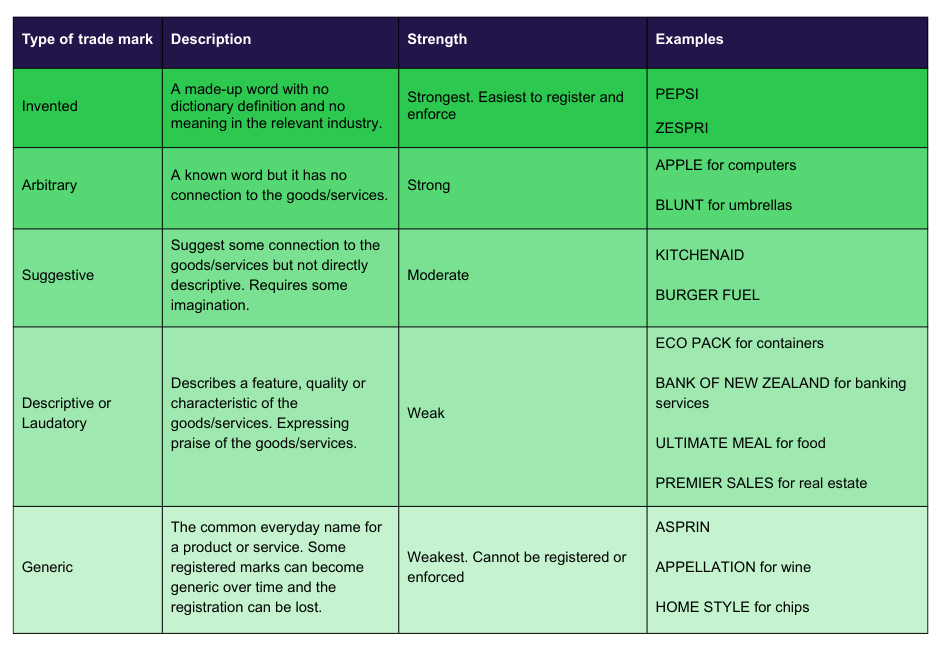
It is still possible to register descriptive or laudatory marks in certain circumstances, but the protection offered will be more limited.
There are also categories of marks such as surnames, geographical names, acronyms and single letter marks which can also be more difficult to register, but can be in certain circumstances.
MoranLaw can review any marks to determine their strength or can advise on options for registering marks which may be weaker.