


With less than two years between the announcement that Glasgow would host the 2026 Commonwealth Games and the opening ceremony on 23 July 2026, the organisers have been faced with an unusual challenge. Unlike previous Commonwealth Games, Glasgow 2026 has been assembled on an accelerated timetable following the withdrawal of the original host Melbourne due to spiralling costs. From an intellectual property perspective, the compressed timetable and budget has not negated the need for trade mark protection - albeit with some interesting decisions.
What's been registered?
The association responsible for delivering the games, The Commonwealth Games Council For Scotland Limited, filed its first trade mark application in April 2024 for GLASGOW 2026 (UK00004038558).
This was followed by filings in October 2024 and March 2025 for the logo 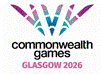 (UK00004115267) and slogan TEAM SCOTLAND (UK00004168471).
A separate company called Glasgow 2026 Limited filed for the mascot name FINNIE (UK00004236950) and mascot image 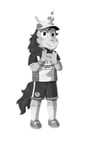 (UK00004237003) in July 2026.
Each application covers up to 14 classes covering not just sporting and entertainment events but a range of merchandise from jewellery to clothing to toys.
The focused protection on a few key word marks, a logo, and mascot is not surprising, given the short timeframe and condensed version of the 2026 games (the number of sports represented at the games has been reduced from 19 to 10 core sports). But, the organisers have made some surprising decisions around its protection.
Protection limited to the United Kingdom
The trade marks for the Glasgow games have only been filed in the United Kingdom. By contrast, trade marks for the previous games held in Birmingham in 2022 were filed in the United Kingdom, South Africa, Australia, New Zealand and India. Marks were even filed in the United States, Turkey and China which are not part of the Commonwealth.
The key mark BIRMINGHAM 2022 was registered in all 45 class in the United Kingdom.
One of the obvious explanations for the stripped back protection can only be a more limited budget.
Timing of the protection
The application for the key mark GLASGOW 2026 was filed five months before Glasgow was officially announced as the new host. This reflects what the International Olympics Committee did by filing the first application for LOS ANGELES 2028 (Swiss registration 710510) three months before the official announcement. It is clear organisers, despite a limited budget, were still IP savvy and recognised the importance of protecting the foundation mark to safeguard the event from counterfeiters and unauthorised commercial exploitation.
Split ownership of the trade marks
The trade marks for the Commonwealth games have been split between two companies. The first is the Commonwealth Games Council For Scotland Limited which is the parent company and has filed for the key marks. The second is Glasgow 2026 Limited which is the event specific corporate vehicle and has filed the applications relating to the mascot.
This shows that the commercial strategies for things like sponsorship agreements, ticketing and broadcasting arrangements, are being kept separate from merchandising programmes and licensing initiatives relating to the mascots.
Protection remains key
The Glasgow 2026 Commonwealth Games may be more streamlined than previous editions, but the organisers have recognised that the event's intellectual property remains one of its most valuable assets. With government funding for the games more limited, organisers must rely more on commercial opportunities for revenue streams. The trade mark protection for the games reflects the need to balance budget with the need to protect a commercial asset capable of underpinning sponsorship, licensing, merchandising and enforcement.